Septic Systems and Private Wells in Northeast Florida: A Buyer's Guide
Many homes outside Jacksonville's city limits run on septic systems and private wells, and both can become expensive surprises after closing. Here's what buyers should know, the warning signs to look for, what a home inspection covers, and which licensed contractors to bring in.

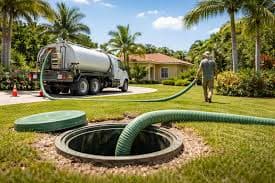
Quick Answer: Many rural homes in Baker, Nassau, Clay, Bradford, Union, Putnam, and inland Duval and St. Johns counties rely on a septic system and a private well instead of city utilities. Before you buy, have a licensed septic contractor evaluate the tank and drain field and a licensed well contractor check the well equipment. A full home inspection covers the house itself, and if you're financing with an FHA or VA loan, Blue Line Inspections LLC collects and submits the required well water samples.
If you're buying a home in Macclenny, Hilliard, Callahan, Yulee, Middleburg, Keystone Heights, Starke, Lake Butler, Interlachen, Hawthorne, or any of the rural communities around Jacksonville, there's a good chance it runs on a septic system and a private well. These systems work well when they're maintained, but they're out of sight, and problems with them can be some of the most expensive surprises a buyer runs into after closing.
I'm Jonathon Norman, owner and inspector at Blue Line Inspections LLC. I cover all 10 Northeast Florida counties (Baker, Duval, Clay, Nassau, Columbia, Bradford, Union, St. Johns, Putnam, and Alachua), and rural homes are a regular part of my week. Here's what to know before you close on a rural property in our region.
How Septic Systems and Private Wells Work
A septic system treats household wastewater on the property. Wastewater flows from the house into an underground tank, where solids settle and are broken down. The liquid then moves through a distribution box into a drain field, where the soil filters it.
A private well draws groundwater up through a cased well with a pump. A pressure tank keeps water pressure steady in the house, and the well's water quality depends on the groundwater and on how well the well head is sealed.
Neither system is regulated or maintained by a utility, so the condition is entirely up to the current and past owners.
Why These Systems Matter Here
A few things make Northeast Florida septic systems and wells trickier than average:
- High water tables. Much of Baker, Nassau, Bradford, and Union counties sits on land barely above the water table, which leaves drain fields little room to work.
- Sandy soils. Sand drains well, but it's inconsistent, and a drain field can perform for years and then struggle.
- Older systems. Many rural homes still have their original septic systems, and older components wear out.
- Hurricanes and heavy rain. Saturated yards stress drain fields, and flooding can affect well water.
- Groundwater character. Iron staining, sulfur smell, and hardness are common in rural Northeast Florida well water, and bacteria can show up in older or poorly sealed wells.
Warning Signs to Watch For
You can't see a septic tank or a well pump during a showing, but you can spot clues:
- Slow drains or gurgling in several fixtures at once
- Soggy ground, standing water, or unusually green strips over the drain field
- Sewage odor outside the home
- Low or fluctuating water pressure, or a pump that cycles on and off frequently
- Orange or brown staining in sinks, tubs, and toilets
- A rotten-egg smell from the hot or cold water
- A well head that's cracked, unsealed, or sitting below grade
- No records of the tank's last pumping or the system's permit
What a Septic Contractor Checks
For a real estate purchase, ask a licensed septic contractor for a full evaluation. That commonly includes locating the tank, distribution box, and drain field if records are missing; pumping the tank so the baffles can be seen; checking the tank's condition and sludge level; evaluating the distribution box; probing the drain field; and comparing what's there with the county's permit records.
What a Well Contractor Checks
A licensed well contractor can evaluate the well head and casing, the pump's flow and recovery, the pressure tank and pressure switch, and the visible water lines between the well and the house, and recommend treatment if the water needs it.
What a Home Inspection Covers
A standard home inspection doesn't replace a septic or well evaluation, and those evaluations don't replace a home inspection. A full home inspection covers the readily accessible and visually observable parts of the house, including the plumbing supply, drains, and fixtures, the water heater, the roof, structure, electrical, and HVAC. That's where problems that connect to a septic system or well often show up first, like slow drains or poor water pressure inside the home.
Financing with FHA or VA? These loans require a certified water test on homes with a private well. Blue Line Inspections LLC offers FHA / VA water testing: samples for total coliform bacteria, E. coli, nitrates, nitrites, and lead are collected at the home and submitted to a state-certified laboratory, and the sampling can happen on the same visit as your home inspection. A septic certification, if your lender asks for one, comes from a licensed septic contractor.
Common Problems on Rural Northeast Florida Properties
What septic and well evaluations in the area tend to turn up:
- Drain fields too close to the water table that struggle in every rainy season
- Collapsed distribution boxes sending all the flow to one drain field line
- Missing or broken tank baffles letting solids into the drain field
- Septic systems too small for additions that added bedrooms
- Wells with low flow that keep up with one shower but not two appliances
- Bacteria in older, shallow wells, especially after hurricanes
- Iron and sulfur that aren't dangerous but are hard on fixtures, appliances, and laundry
- Waterlogged pressure tanks that make the pump short-cycle
When to Schedule
For a purchase, book the home inspection, the septic and well evaluations, and any water testing early in your inspection period so you have time to negotiate.
For a rural home you already own, follow your septic contractor's advice on pumping and inspection intervals, and test your well water regularly, especially after any flooding.
Related Reading
- What to Expect From a Jacksonville Home Inspection: A First-Time Buyer's Guide
- Florida 4-Point & Wind Mitigation Inspections: How to Save on Homeowners Insurance in Jacksonville
- Buying a Home in Jacksonville's Hot Market? Don't Waive the Inspection
- Pre-Listing Home Inspection in Jacksonville: Sellers Guide
- Mold and Moisture in Jacksonville Homes: A Humidity Survival Guide
Frequently Asked Questions
Does a home inspection include the septic system or well? No. A home inspection covers the house, including the plumbing inside it. The septic tank, drain field, and well equipment should be evaluated by licensed septic and well contractors.
Do FHA, VA, or USDA loans require well water testing or a septic certification? Many do. FHA and VA loans require certified water testing on homes with a private well, and Blue Line Inspections LLC collects and submits those samples. Some loans also call for a septic certification, which comes from a licensed septic contractor. Ask your lender exactly what's required.
What if the seller hasn't pumped the tank in years? That's exactly when an evaluation matters most. A tank that's long overdue for pumping and has damaged baffles can mean drain field trouble, so have a licensed septic contractor look before you close.
Do you inspect rural homes in Baker, Bradford, and Union counties? Yes. Blue Line Inspections LLC serves all of Northeast Florida, including Baker, Bradford, Union, Nassau, Clay, Columbia, Putnam, and Alachua counties.
Schedule Your Rural Northeast Florida Inspection
Blue Line Inspections LLC performs full home inspections, FHA / VA water testing, WDO inspections, and HUD foundation certifications throughout the rural counties around Jacksonville. Call or text 904-576-9338 to get on the schedule.
Jacksonville trusted. Northeast Florida proven.
Your home deserves local expertise.
InterNACHI Certified Inspector serving Jacksonville and the surrounding Northeast Florida counties.